


5F-AKB-48 (also known as 5F-APINACA)
5F AKB-48 (5F-APINACA): Chemistry, Pharmacology, Risks & Legal Status
Introduction
5F-AKB-48, also known as 5F-APINACA, is a synthetic cannabinoid belonging to the indazole-based class of cannabinoid receptor agonists. It emerged in the early 2010s as part of the broader wave of novel psychoactive substances (NPS) designed to mimic the effects of Δ9-THC, the principal psychoactive component of cannabis.
Unlike naturally occurring cannabinoids, 5F-AKB-48 is fully synthetic and structurally distinct from phytocannabinoids. It has been identified in forensic casework, toxicology screenings, and public health alerts across Europe and North America.
This article provides an educational overview of its chemistry, pharmacology, toxicology, and regulatory status.
Chemical Structure and Classification
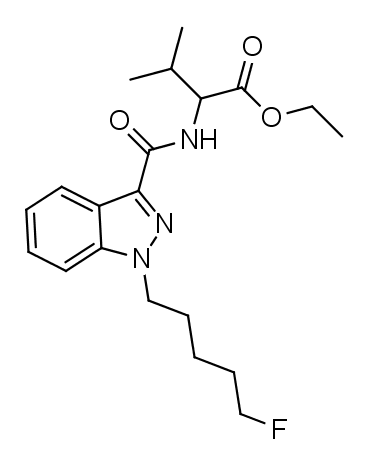
Chemical Name: N-(1-amino-3-methyl-1-oxobutan-2-yl)-1-(5-fluoropentyl)-1H-indazole-3-carboxamide
Molecular Formula: C₂₃H₃₂FN₃O₂
Class: Indazole-based synthetic cannabinoid
Key structural features include:
-
An indazole core
-
A fluorinated pentyl side chain (5F substitution)
-
A carboxamide linkage
-
A bulky amino acid–derived side group
The 5-fluoropentyl chain increases lipophilicity and receptor binding affinity. Fluorination is a common modification in synthetic cannabinoid design to enhance potency and metabolic stability.
Pharmacological Mechanism
5F-AKB-48 functions as a potent full agonist at cannabinoid receptors:
-
CB1 receptors (central nervous system)
-
CB2 receptors (immune system and peripheral tissues)
This distinguishes it from Δ9-THC, which is considered a partial agonist at CB1 receptors. Full agonism can result in more intense and less predictable physiological effects.
CB1 receptor activation influences:
-
Neurotransmitter release modulation
-
Mood and perception
-
Appetite regulation
-
Cardiovascular function
Because synthetic cannabinoids often bind with greater affinity than THC, they may produce stronger and more hazardous effects.
Reported Effects and Duration
Documented case reports describe:
Onset: Rapid (minutes when inhaled)
Peak: 1–2 hours
Total duration: Several hours, depending on exposure route
Reported effects include:
-
Euphoria or dysphoria
-
Anxiety or paranoia
-
Confusion
-
Hallucinations
-
Tachycardia
-
Hypertension
In severe cases, toxicology reports have documented:
-
Seizures
-
Acute kidney injury
-
Cardiac arrhythmias
-
Psychosis
Clinical outcomes can be unpredictable due to variability in potency and formulation.
Toxicology and Public Health Concerns
Synthetic cannabinoids such as 5F-AKB-48 have been associated with significantly higher rates of emergency department visits compared to natural cannabis.
Documented complications include:
-
Severe agitation
-
Hyperthermia
-
Respiratory depression
-
Multi-organ dysfunction in extreme cases
Unlike regulated pharmaceutical agents, synthetic cannabinoid products have historically lacked quality control, contributing to inconsistent potency and elevated risk.
There is no approved medical or therapeutic use for 5F-AKB-48.
Legal Status in Europe and Internationally
5F-AKB-48 is controlled in many jurisdictions.
-
United Kingdom: Controlled under the Misuse of Drugs Act.
-
Germany: Regulated under the Neue-psychoaktive-Stoffe-Gesetz (NpSG).
-
Italy: Controlled under national narcotics legislation.
-
United States: Classified as a Schedule I substance.
Legal frameworks frequently expand to include entire structural classes of synthetic cannabinoids.
Research and Forensic Relevance
5F-AKB-48 is referenced in:
-
Forensic toxicology reports
-
Analytical chemistry identification (GC-MS / LC-MS profiling)
-
Studies of cannabinoid receptor pharmacodynamics
-
Public health monitoring of emerging NPS trends
Its primary relevance today lies in regulatory enforcement and toxicological research rather than therapeutic investigation.
Frequently Asked Questions
Is 5F-AKB-48 natural cannabis?
No. It is a fully synthetic compound structurally different from plant-derived cannabinoids.
Why are synthetic cannabinoids considered higher risk?
They are often full CB1 agonists with higher receptor affinity, leading to stronger and less predictable effects.
Does it have medical approval?
No recognized medical or therapeutic use exists.
Is it legal in Europe?
It is controlled in most European jurisdictions.
Why are effects unpredictable?
Variability in formulation, potency, and individual metabolism contributes to inconsistent outcomes.
| Quantity | 1 Bottle, 2 Bottles |
|---|
Be the first to review “5F AKB 48 C Liquid”
Related products
K2 Liquid Spray

K2 Liquid Spray
K2 Liquid Spray
K2 Liquid Spray
K2 Liquid Spray
Reviews
There are no reviews yet.