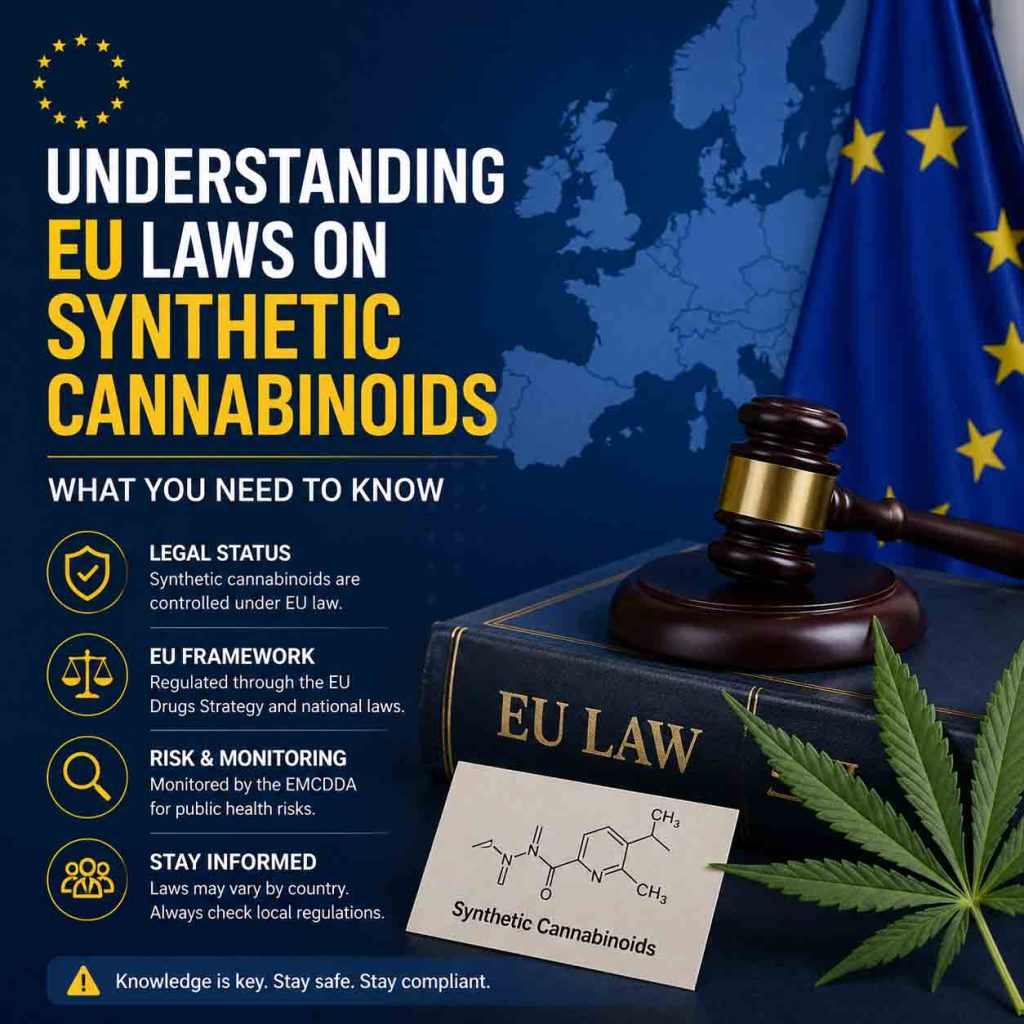
Synthetic cannabinoids have become one of the most tightly regulated categories of psychoactive substances in Europe. Often marketed under names like K2, Spice, or herbal incense, these compounds sit at the center of evolving drug policy, public health concerns, and digital enforcement strategies. Across the European Union, governments have moved beyond traditional drug scheduling and […]
Tag Archives: cross border drug regulation eu synthetic substances
Cross Border Drug Regulation in the EU, Synthetic Substances
Cross-border regulation of synthetic substances in the EU involves cooperation between European institutions, customs authorities, police, and national governments. While the EU supports shared monitoring and enforcement systems, criminal law and penalties are still mainly decided by each member state. This means products moving across borders can face different legal outcomes depending on the destination country.
Shared EU Framework
EU agencies track new psychoactive substances, issue alerts, assess risks, and support coordinated responses. When a dangerous synthetic substance appears in multiple countries, the EU can help member states align control measures more quickly.
National Laws Still Matter
Even with EU cooperation, each country keeps its own:
- banned substance lists
- analogue or class-ban laws
- possession penalties
- import and customs rules
- prosecution standards
A synthetic product tolerated in one jurisdiction may be seized or prosecuted in another.
Shipping and Customs Risk
Cross-border parcels, imports, and online orders receive extra scrutiny. Customs may inspect goods that are mislabeled, contain unknown chemicals, or resemble controlled products. Declaring an item as incense, research material, or collectible does not automatically make it lawful.
Online Sales Across Borders
Websites selling to multiple EU countries can trigger multiple legal systems at once. Marketing, payment processing, delivery, and consumer protection rules may all apply in addition to drug laws.
Bottom Line
The EU helps coordinate action against synthetic substances, but cross-border legality still depends heavily on the laws of the receiving country. For synthetic products, moving goods across EU borders usually carries higher legal risk than domestic sales.