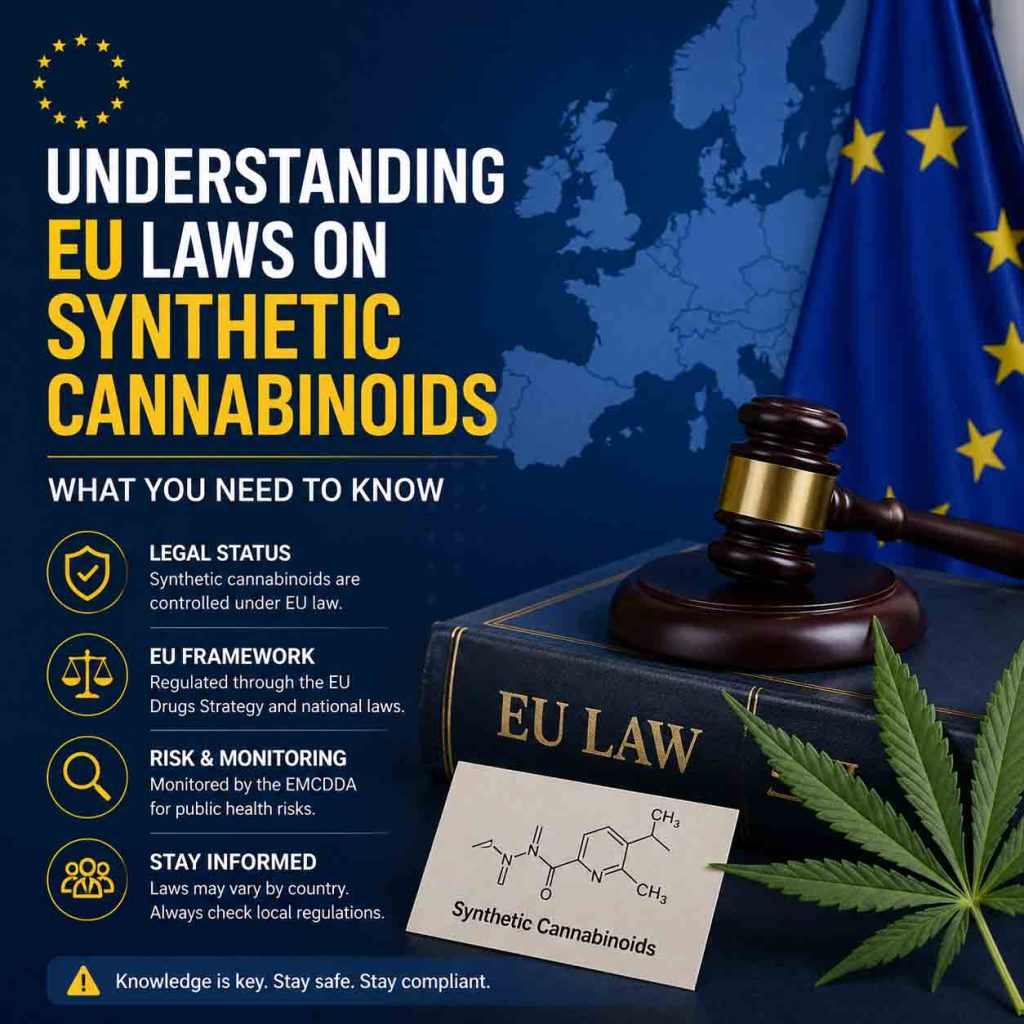
Synthetic cannabinoids have become one of the most tightly regulated categories of psychoactive substances in Europe. Often marketed under names like K2, Spice, or herbal incense, these compounds sit at the center of evolving drug policy, public health concerns, and digital enforcement strategies. Across the European Union, governments have moved beyond traditional drug scheduling and […]
Tag Archives: effect based drug laws europe psychoactive substances
Effect Based Drug Laws in Europe, Psychoactive Substances
Some European countries use effect-based drug laws to control psychoactive substances. Instead of banning only specific named chemicals, these laws can target substances based on their ability to produce psychoactive effects such as intoxication, stimulation, hallucination, or sedation. This approach was introduced to address rapidly changing “legal highs” and new synthetic drugs.
Why Effect-Based Laws Were Created
Manufacturers of new psychoactive substances often changed chemical formulas to avoid traditional banned-substance lists. By focusing on the effect a substance has on the brain or body, lawmakers can capture new compounds even when the exact molecule is not yet individually scheduled.
How They Work
An effect-based framework may prohibit products that:
- produce a psychoactive effect
- are intended for human consumption
- mimic illegal drug effects
- are sold as alternatives to controlled drugs
Scientific evidence, product marketing, packaging, and intended use can all matter during enforcement.
Europe Is Mixed
Not every country uses the same model. Across Europe, governments may combine:
- named substance schedules
- class-based bans
- analogue laws
- effect-based psychoactive substance laws
- consumer safety and medicines laws
For example, the United Kingdom introduced broad psychoactive substance controls, while other countries rely more heavily on chemical scheduling or mixed systems.
Practical Impact
A product may be unlawful even if its exact ingredient is new or uncommon. Items marketed as incense, bath salts, research chemicals, or herbal blends can still be targeted if authorities believe the real purpose is psychoactive use.
Bottom Line
Effect-based drug laws are an important European tool for controlling psychoactive substances, especially new synthetics. They focus on what a product does, not only what it is called or the exact chemical name.